








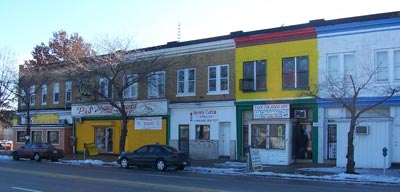
The Upper Park Heights area of Baltimore City, occupied by people of African descent - African Americans, Jamaican Americans, Trinidadian-Americans - and a few other nationalities, is a unique zone of economic neglect. Known as a Caribbean community it has a host of businesses that support its cultural identity. In a two-block stretch from Northern Parkway to Belvedere there are several restaurants and carry-outs featuring Jamaican and Trinidadian cuisine, there is a Caribbean grocery store, record shop, and a Caribbean music dance hall and a few beauty and barber shops. In essence what exist here is an ethnic community and potential tourist destination sorely neglected by the City of Baltimore and its economic purveyors of racism.
To get a sample of the Caribbean culture, its music, food, sights and sounds many Baltimoreans, like others around the country, travel to the islands; when, especially for those who are here, and for the tourist who visit Baltimore, could, and should, be directed to the Caribbean community of Park Heights for just as authentic an experience, minus the beach and the waters. No differently than the way residents and tourist are directed to 'Little Italy', or other 'ethnic' areas of Baltimore City.
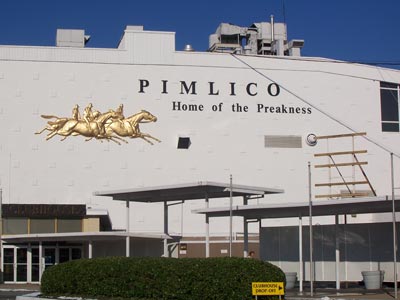 Instead of developing this business district the racist policies that have governed Baltimore City since its inception have turned its back on the community except for the multi-acre race track sitting in the heart of the community - Pimilco Race Track. Interestingly Pimlico Race Track is listed as a destination on all of Baltimore City's official tourism literature, while the Caribbean Community and businesses directly across the streets on Park Heights Avenue and Belvedere Avenue are not. Pimlico Race Track draws tens of thousands of visitors to its location each year, yet these visitors are directed directly into the tracks and out away from the community in which it sits. Meaning that millions of dollars in potential revenue that could be directed to the community is shepherded out to other White destinations.
One must ask this current Mayor if she will continue in the tradition of the White Mayors and the Black Mayors who preceded her to maintain a 'For White's Only' economic agenda towards the Black citizens of the Park Heights Caribbean Community. The same question should be put before the majority Black City Council.
Imagine restaurants and other eateries full of patrons from all over Baltimore, and from out of town; of clothing, art, and gift shops offering the Caribbean style that makes it unique from other African descent groups and unique from other races. If such were the case then there would be increased Black business ownership, employment, and wealth; there would be increased revenue for the City and most importantly for the community to make improvements.
It is the responsibility of the City Administrators to develop the economic districts and corridors of the city to the benefit of the communities and the city as a whole. The revenue that could be generated by the Caribbean community of Park Heights would certainly result in improving the quality and standard of living for its residents. Money invested in improving the streets, sidewalks, business facades, building renovations, and public relations would more than pay for itself from the economic rewards that would accrue to it, the same as it does in the White communities the City has invested in.
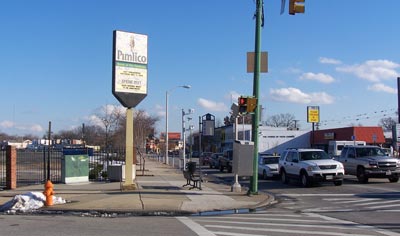 Additionally, the merchants of Park Heights along with real community leaders must create the kind of organization that would allow them to impact and control their economic destiny. For, as the saying: "The more things change the more they remain the same" has any indication of what is possible it could very well be an economic district developed for the folks who've been moving Blacks out and hogging the economic benefits for themselves.
In 1965 we moved away from Cherry Hill, to the community of Lexington Terrace for three years, to 'in-town', as we called it. We lived on the second floor of an apartment dwelling on the corner of Fayette and Pine Streets. There we did business with a few African American businesses and with even more Caucasian owned businesses. Interestingly I remember overhearing conversations of my parents and their friends referencing a time when Caucasians would sell Black people horse meat while trying to pass it off as some other kind of meat. That conversation had the impact of making me suspect of lunchmeat (cold cuts). We purchased lunchmeats from a butcher across the street from us - on Pine Street, where periodically one would see horses hitched outside, or you could smell their presence. When it was time for Bologna sandwiches I was always the last to bite into mine; before doing so I needed to know if anyone detected the taste of horsemeat in theirs. We bought carryout from a store directly across the street from us on Fayette Street; I remember they made the best tasting hotdogs with meat sauce. However the biggest treat for me, as a child, was when my parents brought dinners from the famous Black owned restaurant Sampson's whose food we loved, though as a poor family we could hardly afford.
We returned to Cherry Hill in 67' between then and the time I would eventually leave the community one of the two Caucasian owned groceries stores was boycotted out-of-business for selling outdated and rotted meats to our community, the other, formerly an A & P Supermarket, either folded or was purchased by an African American family - Edward and Shirley Hunt - for whom the store was later named E & S Supermarket. A carryout, that I don't recollect ever going into before, was purchased by the noted African American NFL football player John Macke, and was named after him. I do remember this carryout well because I spent every dime I could scrape up to eat there, especially for their fish subs. In time a second African American owned carryout was opened across the street from John Macke's; however, I don't remember the name of it. I do remember I favored John Macke's over the second one. Eventually the second carryout folded. John Macke's, however, changed hands a few times before being bought by the Reed family that lived in the community.
E & S Supermarket was at the time a milestone for the community to have a Black owned supermarket, especially in light of the overall Black-Power and Civil Rights Movement that swept the country impacting African Americans to put more thought and energy into owning and controlling their own destiny - economic and otherwise. African American owned Blue-Waters Seafood Carryout, owned by Mr. Levy was moved across the street to a supposedly temporary location; the original Blue-Waters Seafood building was razed while a new Blue-Waters Seafood edifice was being erected on the location of the old. (To be continued).