






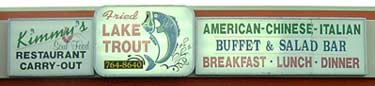
I remember in the early 80's standing in Reed's Carryout, in Cherry Hill of South Baltimore, engrossed in a conversation with one of the owners who was lamenting the lack of commitment and race-allegiance on the part of Black consumers who were patronizing a Korean owned carryout directly across the street on Cherry Hill Road. Reed, the owner stated: "If yall don't watch
out soon they'll have on the menu 'Chittlin-Chow Mien' and 'Pig-Feet Fried Rice'..." We all laughed.
Yet, not more than two years later, his very words came true - it was on the menu of several Korean carryout's in the Black community.
For the most part Reed was voicing concerns about the influx of Asian owned stores, especially carryout's in the Black community; and worse, they were selling Black peoples own cuisine - Soul Food / Southern Cuisine - back to them.
Of course the questions - 'Why?' and 'How could this happen?' would immediately come to mind for anyone concerned with Black tradition and Black Businesses.
However before attempting to answer those questions a few other questions should be asked, namely: 'What is Soul Food?', and 'What is Seoul Food'?
Soul Food is the collection of foods adopted / adapted, prepared and consumed by African Americans from the era of chattel-slavery till its overt celebration beginning in the 1960's. It included pork, chicken, fish, yams, sweet-potatoes, collard greens, cabbage, rice, potatoes, beans, corn, tomatoes, onions, garlic, mustard greens, kale, string-beans, okra,
berries (mainly blue and black), apples, peaches, pears, squash (including zucchini and pumpkin), water-melon, and a variety of game meats - rabbit, deer, turtle, and possum.
The cuisine was characterized by the various cuts of meat and how the foods were prepared overall.
Outstanding preparations within the cuisine are fried-fish, fried chicken, boiled chitterline (or pigs intestines), meat stews, vegetables (mainly the greens) seasoned with animal fat and lesser cuts of meat, vegetable casseroles (especially sweet potatoes), and the variety of fruit pies and cobblers.
Although all of theses foods were prepared in a variety of ways it was the best tasting preparations that became celebrated throughout Black America. During various periods of Black political and cultural expression and movements - the 1920-s, 40's and 60's - the cuisine was celebrated as a symbol of our cultural achievement.
Black's were proud to state they ate Soul Food and that it was "like no other" and "better" than any other cuisine. Additionally, it was proclaimed that "no one other than a Black person could cook it and have it taste the way a Black cook could".
In fact, it was often cause for laughter when the subject of another race trying to cook like Black people came up.
Seoul Food on the other hand, is a collection of foods including noodles, rice, a variety of vegetables not local to the US, fermented rice, noodles and meats; in short, a cuisine very different in content and preparation from that of 'Soul Food'.
It is a cuisine steeped in the traditions of Korea, Koreans and the Asian experience which is quite different than that of African Americans.
Upon migrating to the US Koreans setup shops patterned on those of their Chinese relatives; they sold food under the general title of "Chinese Food".
However Koreans took a different tact, they began to include aspects of 'Soul Food' on their menu - 'Pig-feet Fried Rice', 'Chitterlin Fried Rice', etc. Because Black people purchased it they included more and more appropriating much of the Soul Food cuisine 'till now the Koreans have more establishments in the Black community called 'Soul Food' than do Black people.
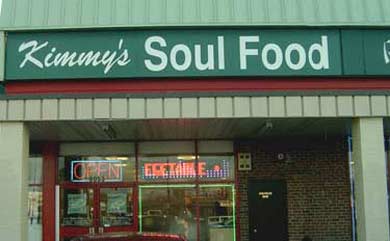 Of course the story and treatment of 'Soul Food' is consistent with the treatment of Black people in the Baltimore area as a whole - local government in collaboration with White business interest have persisted in preventing Black cultural and business development from competing with their domination of the Black economy and profiteering interest.
While local government worked at undoing the gains of the Black Power movement and Black Pride, the White business organization took on dominating the Black economy. The end result has been a demoralized community without leadership or institutions perpetuating Black power, pride, or defense. Consequently Asians and other racial groups have been able to set up shop
in the Black communities even when Blacks cannot.
Of course the story and treatment of 'Soul Food' is consistent with the treatment of Black people in the Baltimore area as a whole - local government in collaboration with White business interest have persisted in preventing Black cultural and business development from competing with their domination of the Black economy and profiteering interest.
While local government worked at undoing the gains of the Black Power movement and Black Pride, the White business organization took on dominating the Black economy. The end result has been a demoralized community without leadership or institutions perpetuating Black power, pride, or defense. Consequently Asians and other racial groups have been able to set up shop
in the Black communities even when Blacks cannot.